The short version: Making friends at camp takes more than being the same age. “Social fit” means grouping campers with compatible interests, personalities, and social needs, giving friendships a better chance to develop. At Camp Kodiak, that process begins with camper interviews and continues with skilled, experienced counsellors who actively teach social skills and help campers build meaningful connections.
In the 1970s, my father worked for a well-known Canadian summer camp. As campers registered, they were placed on a list by gender and age. When it came time to organize cabins, the director simply counted off the right number of names, and they became a cabin. Little thought was given to whether the campers had anything in common or where they might feel most comfortable.
If one of the main reasons parents send their children to camp is to make friends, organizing cabins by age and gender alone doesn’t make much sense. My dad understood that when he started Camp Kodiak.
There are many factors that contribute to friendship-making, and age is relatively low on the list. Interests, abilities, social skills, and personality are often much more important. Some 13-year-olds are active, competitive, and athletic, while others are shy, cautious, or cerebral. They’re not necessarily going to gravitate toward one another.
If we want to maximize a camper’s chances of making genuine friendships, we need to give them opportunities to spend time with like-minded peers.
At Camp Kodiak, we call this “social fit.” We build cabin groups around campers we believe will get along, share interests, and have similar needs. Age still matters, of course—8-year-olds and 16-year-olds aren’t cabin-mates—but most cabins include a range of ages, such as 12–14 or 16–18, and we often have multiple cabin groups within the same age range.
Social Skills Difficulties
Youngsters with learning disabilities, ADHD, and autism can experience greater social difficulties than their typically developing peers. Challenges with social communication, emotional reciprocity, and interpreting non-verbal cues can make forming and maintaining friendships particularly difficult.
We hear it regularly from parents. Their children have struggled with classmates, neighbours, siblings, or cabin-mates at other camps. Some have experienced bullying or exclusion, while others have simply felt peripheral to existing friendships and cliques.
For families whose children have experienced this kind of isolation, trying overnight camp (or trying again after a difficult experience) can feel daunting. That’s why setting campers up for social success is so important.
Thinking About Social Fit
How do we take kids who have experienced social difficulties and help them develop friendships?
It starts before they arrive. We interview campers to determine where they might fit best. Are there returning campers with similar personalities or interests? Other kids who love Pokémon, musical theatre, Minecraft, or baseball? Would a camper feel more comfortable with slightly younger or older peers? Would a boisterous cabin be overwhelming, or would a quieter group leave them feeling restless?
Once camp begins, counsellors use everyday interactions to model and teach social skills. Sharing a cabin with up to eight other campers and three staff members inevitably creates occasional conflict. But those moments also provide opportunities to learn.
Counsellors help campers understand another person’s perspective, recognize how their actions affect others, and work through misunderstandings. Because cabin groups are built around compatible campers with similar needs, these lessons can be tailored to the group. And because they happen in the moment, in real situations, they’re more likely to stick.
Of course, not every camper struggles with social skills. Some are simply navigating the usual challenges of growing up: disagreements with friends, competition, gossip, and changing relationships. They benefit from social fit, too, by finding peers who challenge them and offer opportunities for genuine, reciprocal friendships.
What It Looks Like in Practice
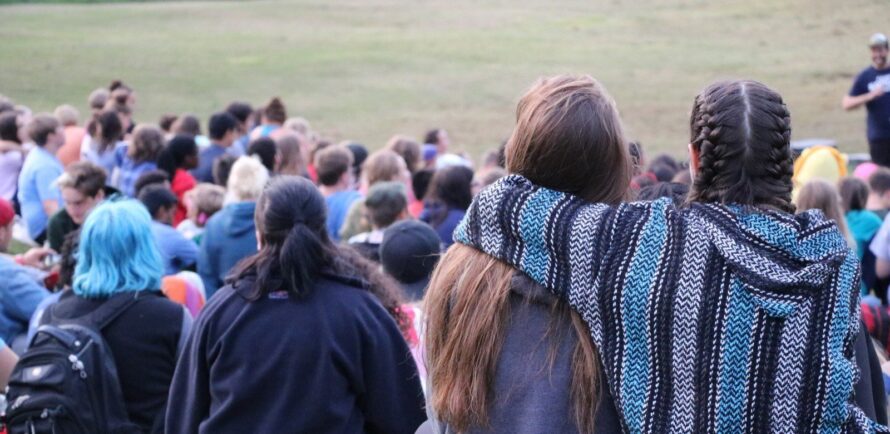
Walk around Camp Kodiak during Free Play and you’ll see all kinds of social groups. Some campers are playing basketball or floor hockey. Others are sitting on the grass with a guitar, playing Gaga Ball, or gathered around a picnic table for Magic: The Gathering.
Campers aren’t required to stay with their cabin groups during Free Play, but many choose to. Why? Because their cabin-mates are often the kids who share their interests. They’ve found their social fit.
A while back, I met a mother interested in registering her daughter at Camp Kodiak. Her daughter was an experienced camper who had attended a mainstream camp with her sibling for years through an inclusion program. She enjoyed camp, but as she grew older, it became increasingly clear that she was a round peg trying to fit into a square hole.
The other campers were generally kind, but they didn’t seek her out for friendships.
What struck this mother was the possibility that, for the first time, her daughter wouldn’t have to squeeze herself into a structure that didn’t quite fit. Instead, she’d be joining a group designed with her needs and interests in mind, alongside campers who might become genuine friends.
And the best part? Her sibling could come along, too, because we had a good social fit for her as well.
As the sign in our office says, “There’s a significant difference between ‘all are welcome here’ and ‘this was created with you in mind.’”
About the Author