Most parents would happily keep their children close forever. We, as parents, want to be the person they turn to when they are unsure or overwhelmed. But one of the most important things we can give them is the confidence to manage when we are not right beside them.
That confidence does not suddenly appear at a certain age. Independence is not something children simply grow into; it develops through practice. Each manageable stretch away from home lets a child make decisions, solve problems, ask for help and discover that they can handle more than they thought.
The process starts early and builds gradually. The exact timing will be different for every family, but the progression often looks something like this.
Independence comes in steps
3 minutes – the approximate amount of time you might leave your infant alone in their crib for the first time.
You stay nearby and make sure they are safe, then gradually build the amount of time they can remain calm and comfortable on their own. The separation is tiny, but the lesson has begun: I can be okay without my parent immediately beside me (which is also something new parents are learning!).
3 hours – leaving a young child in the care of a babysitter or daycare provider.
Your child learns that another trusted adult can help them, comfort them and meet their needs. Parents are practising too: choosing someone they trust and allowing their child to form relationships outside the family.
3 days – a sleepover with grandparents, cousins or another family member.
Now the child moves through more of the daily routine without a parent present. They may need to ask for help, explain what they want, manage disappointment and settle themselves at bedtime. They are still with people who know and love them, but they are taking more responsibility for navigating the experience.
3 or 4 months – the length of a first semester away at college or university, or another extended period living away from home.
By then, young adults may be expected to manage a budget, live with roommates, handle challenging relationships, join a club or team, keep track of deadlines, and make reasonably good decisions about eating and sleeping (we hope). The academic work may be demanding, but much of the real challenge lies in managing everyday life without a parent organizing it in the background.
But what about the space in between?
There is a very large leap between a few days with relatives and a few months living away from home. Children need somewhere to practise the skills that fill that gap; somewhere new enough to require independence, but structured enough that support is always close by.
That is where the missing step comes in: 3 weeks, give or take.
Camp as practice for independence
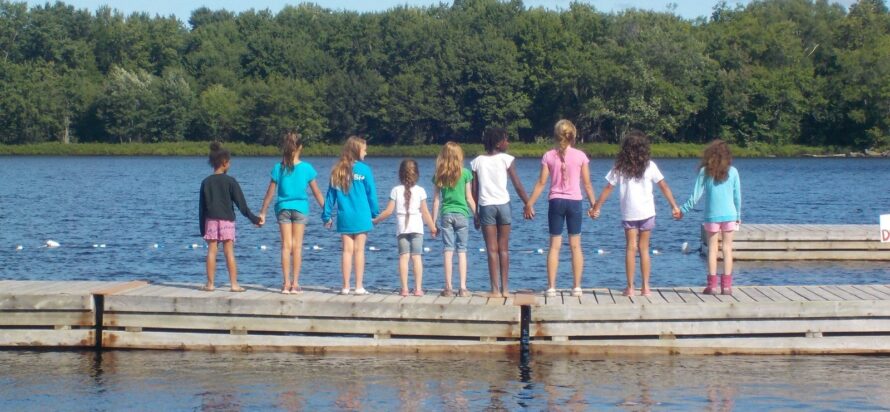
A camp session may be two weeks, three weeks, four weeks or longer, but the purpose is much the same. Camp gives kids a chance to live away from home in a community designed to help them succeed. They practise doing more for themselves while trusted adults remain nearby to guide and support them when needed.
At Camp Kodiak, campers learn to live with peers and share bathrooms, common spaces and other resources. They collaborate on group tasks, work through disagreements, try different problem-solving strategies and practise positive social skills. They also learn when to keep working at a problem and when to ask a counsellor, staff member or friend for help.
These are life skills, social skills and executive functioning skills, but to a camper they often just feel like camp: remembering what to bring, getting along with cabinmates, trying something unfamiliar, recovering from a difficult moment, or managing a problem without calling home. Each experience adds another piece of evidence: I can do this.
The value of camp is not limited to any one summer, even when that summer includes new friends, favourite activities and wonderful memories. Over time, each camp experience becomes another step toward greater independence. Campers return home knowing a little more about what they can manage, and they carry that knowledge into school, friendships, family life and eventually the larger world.
Camp is fun, and that matters. But it is also a place where children can practise being capable before the stakes become much higher. We may always want our children close. Our real goal, though, is to help them become confident enough to step away – and to know they can find their footing when they do.
About the Author